
 Available in US
Content
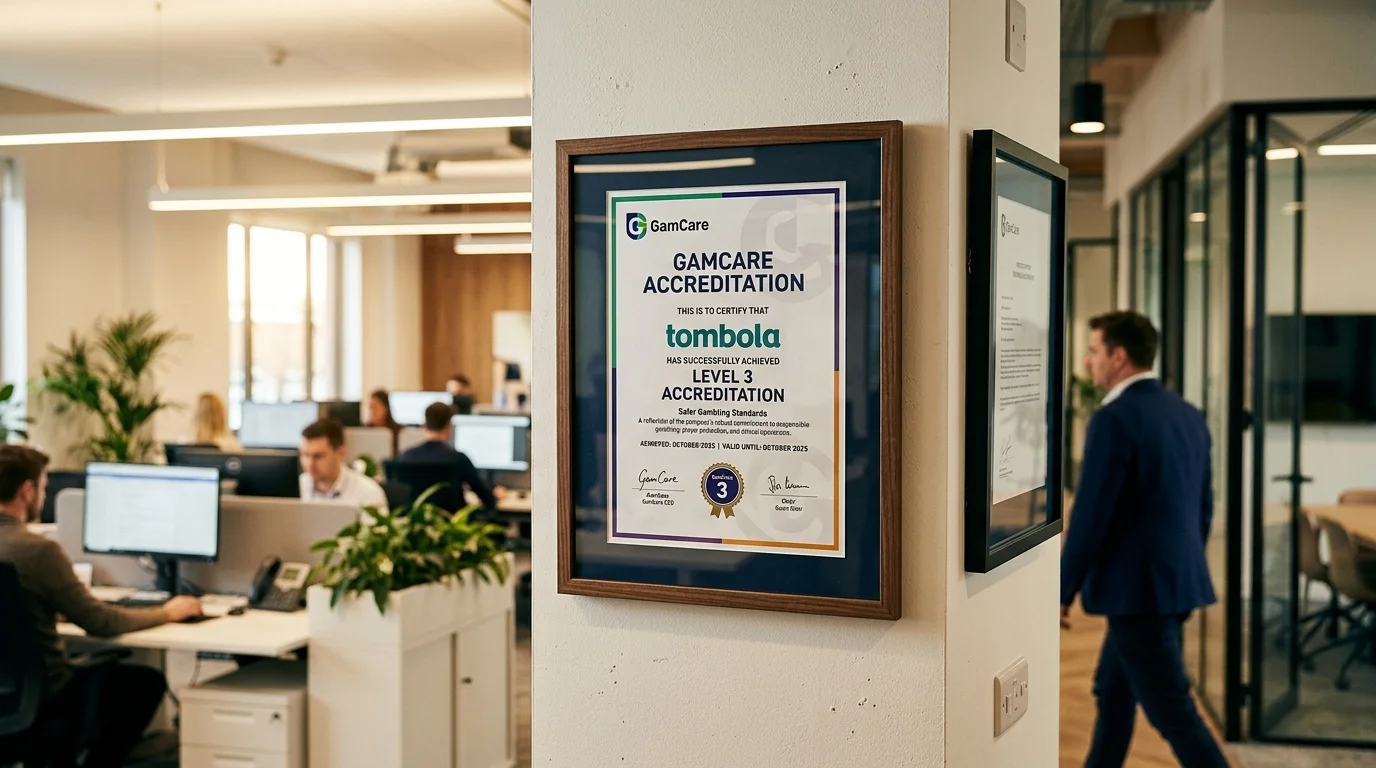
Tombola holds GamCare Level 3 accreditation — the highest tier of the Safer Gambling Standard — alongside multiple EGR Awards for responsible gambling practices. That sentence appears on dozens of review sites, usually without any explanation of what Level 3 actually requires, how it differs from the lower tiers, or why it matters beyond being a badge on a footer. The accreditation process is rigorous enough that the distinction between levels represents genuinely different standards of player protection, and understanding those differences turns a marketing claim into a measurable benchmark.
GamCare Safer Gambling Standard: Level 1, 2 and 3 Compared
The UK Gambling Commission carried out 9,700 compliance actions in 2024/25 — more than double the 4,200 recorded in the previous year. That enforcement surge reflects a regulatory environment where the baseline requirements for operating legally are tightening rapidly. GamCare’s Safer Gambling Standard sits above that baseline, as a voluntary accreditation framework that recognises operators going beyond minimum regulatory compliance. The UKGC itself has described the licensed gambling market in Great Britain as “one of the most respected in the world,” attributing that reputation to its “unwavering focus on making gambling safer, fairer and crime free.”
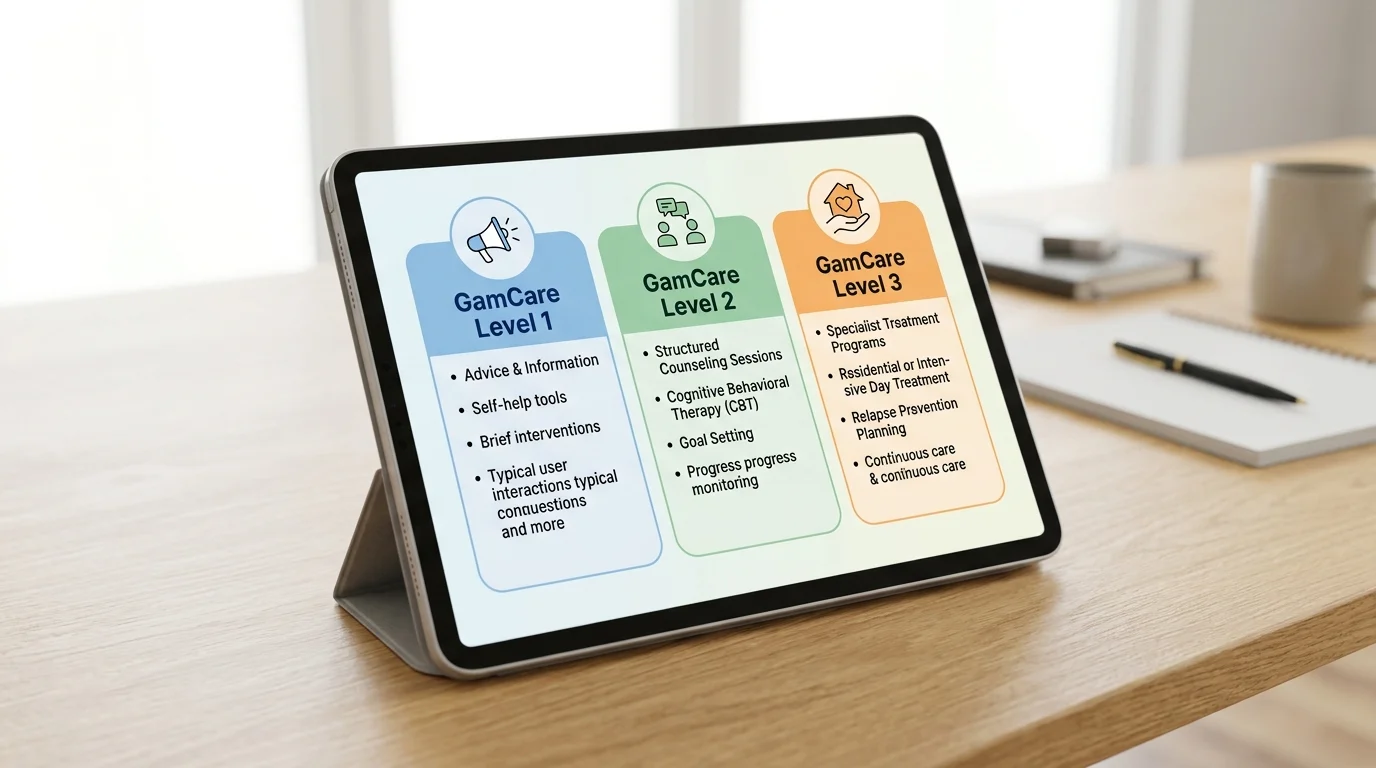
The standard operates across three levels, each building on the one below. Level 1 is the entry point. It requires operators to demonstrate basic safer gambling policies: a responsible gambling page on the website, staff awareness of problem gambling indicators, and access to information about support services. Level 1 is achievable for any operator that takes the process seriously, and it represents a commitment to meeting industry norms rather than exceeding them.

Level 2 raises the bar significantly. Operators must show evidence of integrated safer gambling practices — not just policies on paper, but systems embedded into the product and customer journey. This includes proactive player monitoring, trained customer support teams capable of identifying and responding to signs of harmful gambling, and internal processes for reviewing and improving safer gambling measures. The gap between Level 1 and Level 2 is not incremental; it requires structural changes to how the business operates.
Level 3 represents the highest standard. Beyond integrated practices, Level 3 operators must demonstrate leadership in safer gambling — innovation in player protection tools, measurable outcomes from their interventions, and a culture where safer gambling is a strategic priority rather than a compliance function. The criteria include advanced player analytics, bespoke intervention protocols that go beyond generic pop-up messages, and evidence that the operator’s approach to safer gambling evolves based on data and research rather than remaining static once certification is achieved.
The Audit Process: How Operators Earn and Maintain Level 3
I attended an industry conference where a compliance director from a mid-sized operator described the GamCare Level 3 audit as “the most thorough external review we have been through, including our UKGC licence renewal.” That assessment reflects the depth of the process, which goes well beyond a document review.

The audit involves a multi-stage assessment. GamCare’s assessors examine written policies, but they also test operational practices. This includes mystery shopping — assessors interact with self-exclusion processes, customer support channels and responsible gambling tools as if they were regular players, evaluating the quality and consistency of the operator’s response. Staff interviews are conducted at multiple levels, from frontline support agents to senior management, to assess whether safer gambling principles are understood and applied consistently throughout the organisation.

The technical infrastructure is also scrutinised. Assessors examine the player monitoring systems, the data used to identify at-risk behaviour, and the intervention protocols triggered by that data. An operator that relies solely on player-initiated tools — deposit limits, self-exclusion options, reality checks — without any proactive monitoring would struggle to achieve Level 3. The standard expects operators to identify potential problems before the player takes action, using behavioural data to trigger interventions at the right moment.
Certification is not permanent. Operators must undergo periodic re-assessment to maintain their level, and GamCare reserves the right to downgrade or withdraw accreditation if standards slip. This ongoing requirement means that Level 3 is not a one-time achievement but a continuous commitment — the audit is not something you pass once and forget about, but a recurring cycle that requires sustained investment in safer gambling infrastructure and practices.
How Many UK Operators Hold Level 3 and Why It Matters
The number of operators holding Level 3 accreditation at any given time is a small fraction of the total UK-licensed market. The UKGC licences hundreds of operators, and while many engage with GamCare at some level, Level 3 certification remains concentrated among larger operators with the resources and organisational commitment to meet the standard’s demands.
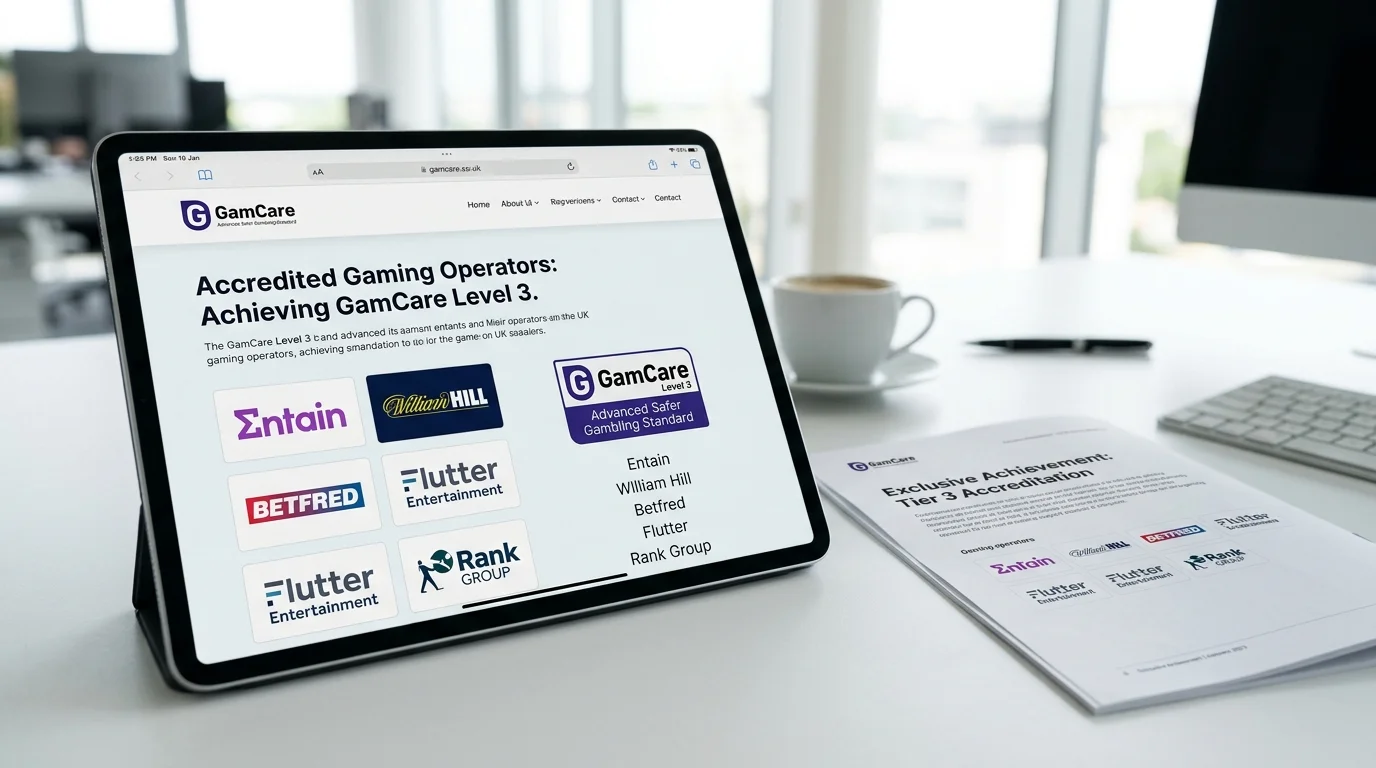
This concentration is not accidental. Level 3 requires investment — in technology, in training, in dedicated safer gambling teams, and in ongoing assessment costs. Smaller operators often lack the scale to justify that investment, not because they are less committed to player safety but because the infrastructure required for Level 3 is enterprise-grade. The practical result is that Level 3 functions as a signal that an operator has both the intention and the capacity to deliver advanced player protection.
For players, the Level 3 accreditation provides a reference point that is more specific than a UKGC licence alone. All UK-licensed operators meet the same regulatory minimum, but the range of practice within that minimum is wide. Two operators can both hold a UKGC licence and have dramatically different approaches to player protection. GamCare Level 3 narrows that range by identifying operators that have been independently verified to operate at the higher end. It is not a guarantee that nothing will go wrong — no accreditation can promise that — but it is evidence of systems, processes and culture designed to reduce the likelihood and severity of harm.
Tombola’s Level 3 status sits alongside its broader approach to responsible gambling, which includes mandatory spend limits, cooling-off periods, self-exclusion options and integration with GamStop, the national self-exclusion scheme. The accreditation validates these features not just as available tools but as part of a coherent, audited framework that meets the highest independent standard in the UK market.

How often does GamCare re-audit operators for Level 3 accreditation?
GamCare conducts periodic reassessments to ensure accredited operators continue to meet the required standards. The exact cycle varies, but operators must demonstrate ongoing compliance and continuous improvement. Level 3 is not a one-time certification — it requires sustained investment and regular verification.
Does GamCare Level 3 guarantee that a site is completely safe?
No accreditation can guarantee absolute safety. GamCare Level 3 confirms that an operator has been independently assessed against the highest tier of the Safer Gambling Standard and has demonstrated advanced player protection systems, proactive monitoring and a leadership-level commitment to safer gambling. It reduces risk but does not eliminate it entirely.