
 Available in GB
Content
- Main Tombola vs Tombola Arcade: Separate Accounts, Separate Libraries
- Arcade Game Catalogue: Scratch Cards, Instant Wins and Number Games
- RTP Data Across Tombola Arcade Titles
- Tombola Arcade Welcome Offer and Promotions
- Arcade on Mobile: App Availability and Browser Performance
- Who Should Choose Arcade Over the Main Bingo Platform
- Tombola Arcade Questions

I cannot count the number of times a reader has emailed me asking why their Tombola login does not work on Tombola Arcade. The confusion is understandable — both platforms carry the Tombola name, both are owned by the same company, and both operate under UKGC licences. But they are separate platforms with separate accounts, separate game libraries, separate bonus structures and separate apps. If you approach Arcade expecting a sub-section of the main Tombola site, you will be confused from the first screen.
Tombola Arcade exists because the main platform is built around bingo. The bingo rooms, the chat hosts, the community features, the 90-ball and 75-ball schedules — all of that defines the core Tombola experience. Arcade was created to serve a different player profile: someone who wants quick-play games — scratch cards, instant wins, number-matching titles — without the social, session-based rhythm of bingo. At the point Flutter Entertainment acquired Tombola for £402 million, the company had around 400,000 average monthly players across both platforms and more than 700 employees developing games for both libraries. The two platforms share a development philosophy — everything in-house, no third-party providers — but they serve distinct purposes within the Tombola ecosystem.
This article covers everything you need to know about Tombola Arcade as a standalone product: how it differs from the main platform, what games are available, the RTP data, the bonus structure, mobile performance, and who the platform is actually designed for. If you have been treating Arcade as an afterthought to the main bingo site, this should reframe the picture.
Main Tombola vs Tombola Arcade: Separate Accounts, Separate Libraries
The first thing to understand is structural: Tombola and Tombola Arcade are two distinct platforms that happen to share a parent brand. You register separately for each. Your balance on one does not carry over to the other. Your deposit limits, responsible gambling settings and account verification are independent between the two. If you set a £50 weekly deposit limit on your main Tombola account, that limit does not apply to your Arcade account unless you set it there separately.
This separation creates both clarity and confusion. The clarity comes from the fact that each platform is designed around a specific type of game. Main Tombola is a bingo platform with some instant-win titles. Arcade is an instant-win and scratch card platform with no bingo. There is no overlap in the game libraries — you cannot play a bingo room on Arcade, and the scratch card titles available on Arcade are not available on the main site. The confusion comes from the branding: players who discover Tombola through advertising or word of mouth often assume Arcade is a tab within the main site, not a separate destination requiring separate registration.
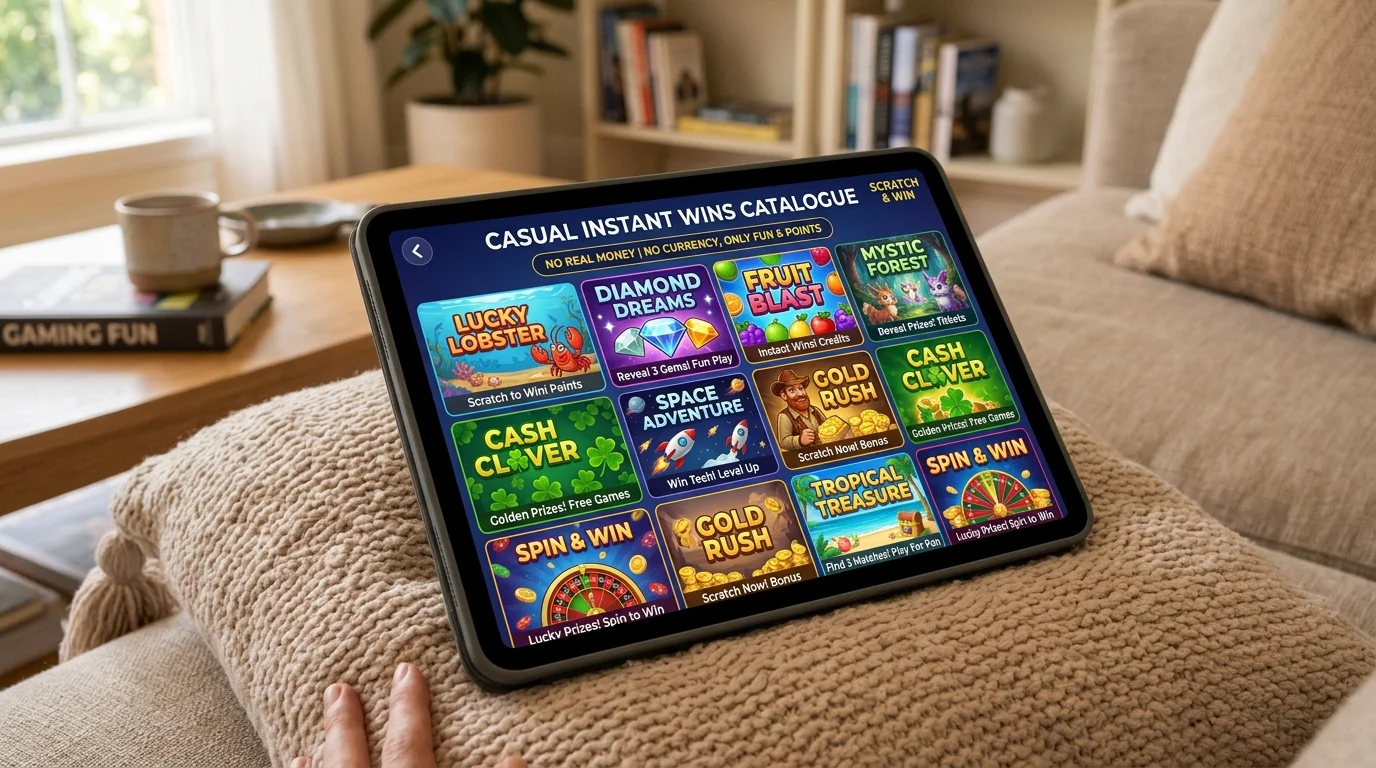
The two platforms share responsible gambling infrastructure in the sense that both operate under UKGC licences, both offer the same suite of player protection tools, and both participate in the GamStop national self-exclusion scheme. If you register with GamStop, both your Tombola and Arcade accounts are suspended. But short of GamStop, the accounts operate independently. A self-exclusion from one platform does not automatically extend to the other — you would need to self-exclude from each separately. This is a point I have flagged in previous reviews because it creates a potential gap: a player who closes their main Tombola account to manage their gambling could immediately open or continue using an Arcade account without any friction.
From a financial perspective, the platforms also handle payments independently. You deposit to one, you withdraw from one, and your transaction history is separate. This means a player active on both platforms effectively maintains two separate gambling accounts, with the budgeting and monitoring implications that entails. For players who want a clean view of their total gambling expenditure across Tombola products, that requires manually tracking both accounts.
The question of why Tombola maintains this separation rather than merging the two platforms under a single account is a strategic one. The most likely answer is product clarity. Bingo players and instant-win players have different expectations, different session patterns and different engagement rhythms. A unified platform would need to serve both audiences simultaneously, which risks diluting the experience for each. By keeping them separate, Tombola can optimise the design, navigation and promotional structure of each platform for its target audience without compromise. The cost is user confusion at the registration stage — but once a player understands the structure, the separation makes each platform easier to navigate, not harder.
There is also a regulatory dimension. Each platform operates under its own UKGC licence conditions, maintains its own responsible gambling reporting, and submits its own compliance data. That separation creates cleaner regulatory boundaries and simpler audit trails. In an environment where the UKGC is intensifying compliance oversight — carrying out more than double the number of compliance actions in 2024/25 compared to the prior year — operational simplicity has tangible value.
Arcade Game Catalogue: Scratch Cards, Instant Wins and Number Games
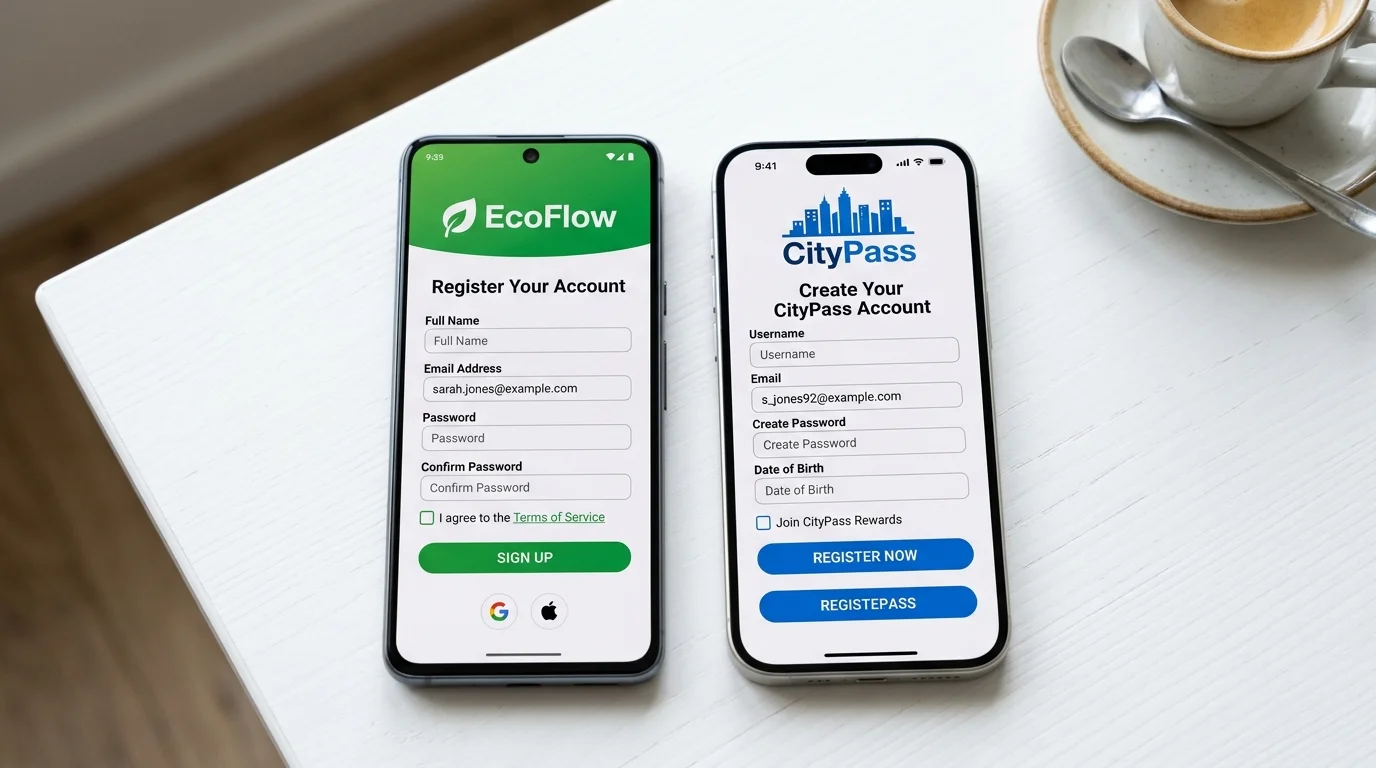
Last year I spent a Saturday afternoon methodically playing through every available title on Tombola Arcade, timing each game, noting the mechanics and recording the stake ranges. What struck me was not the individual quality of any single game — they are competent, well-designed, but not trying to be cinematic — but the consistency of the design language. Every title feels like it belongs on the same platform, which is the advantage of building everything in-house rather than licensing a patchwork from external studios.
The scratch card category forms the backbone of Arcade. These are digital versions of the physical scratch cards you would find in a newsagent, with the obvious advantage of instant resolution and variable stake sizes. The mechanics are straightforward: reveal symbols, match patterns, win prizes. What differentiates Tombola’s scratch cards from generic versions is the variation in theme and structure. Some use a simple three-match format; others incorporate multiple layers, bonus areas or progressive elements that extend the game beyond a single reveal.
Instant-win games on Arcade operate on similar principles but with more varied interaction models. Number-matching games require you to select or reveal numbers that correspond to winning combinations. Pick-and-reveal games present a grid of hidden values and let you choose which to uncover. Pattern-completion games challenge you to fill a specific arrangement before running out of turns. The stake ranges start low — fractions of a pound in many cases — which keeps the platform accessible to recreational players and consistent with the global online bingo market’s trend toward low-cost, high-frequency participation. That market reached $3.22 billion in 2025 and continues to grow at roughly 6.5% annually.
The total number of titles available at any given time fluctuates because Tombola rotates games in and out of the Arcade catalogue. A title available today might be replaced next month by a seasonal variant or a new release. This rotation keeps the library feeling fresh without requiring the constant churn of new development, and it gives the team data on which games resonate most strongly with the player base. The downside is that if you have a favourite Arcade game, it might not always be available — a frustration that bingo players on the main platform do not typically encounter, since the core bingo rooms are permanent fixtures.
For a broader look at how the main Tombola game library compares in terms of categories, RTP ranges and development philosophy, the dedicated games review covers the full picture across both platforms.
The absence of bingo on Arcade is worth restating because it defines the platform’s identity. Arcade does not offer 90-ball, 75-ball, Five-Line or any other bingo variant. If your primary interest is bingo, Arcade is the wrong platform — full stop. What Arcade offers instead is a pure instant-gratification format: every game resolves within seconds or minutes, there is no waiting for other players, and the experience is entirely solitary. Some players will see that as a limitation; others will see it as the whole point.
RTP Data Across Tombola Arcade Titles
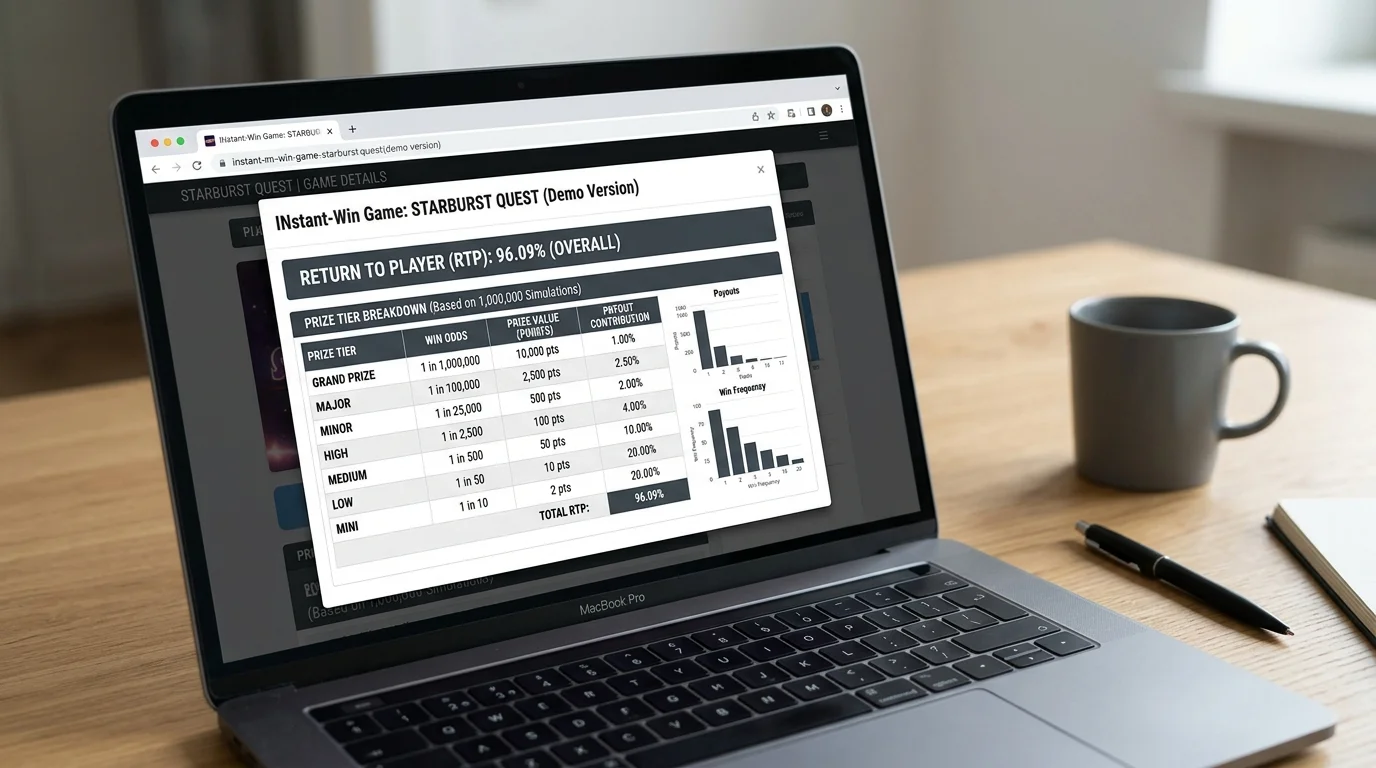
RTP on Arcade titles works the same way as on the main platform — each game publishes its return-to-player percentage in the game information section, accessible before you place a stake. The difference is that Arcade games tend to cluster in a tighter RTP range than bingo rooms, because the mechanics are more standardised. A scratch card is fundamentally a fixed-probability game: the outcomes are predetermined at the point of purchase, and the RTP reflects the overall distribution of prizes across the total ticket population.
For players coming from bingo, where the RTP is influenced by the number of tickets in play and the prize pool structure, the fixed-probability model of Arcade games represents a different relationship with the numbers. In bingo, your individual return varies with how many other players are in the room. In a scratch card or instant-win game, the RTP is baked into the game design and does not change based on participation levels. This makes the maths more predictable on a per-game basis, though the variance within any individual session remains high because individual outcomes are binary — you either win or you do not, with no partial returns.
Tombola publishes these figures within each game’s information panel. The data is accessible in a few taps from the game lobby, and I would encourage any player to check before committing a stake. The habit of checking RTP before playing is one of the simplest risk-management practices available, and it costs nothing but a few seconds of reading. Not every game on Arcade carries the same return percentage, and knowing which titles offer better theoretical returns is the kind of edge — if you can call it that in a negative-expectation environment — that separates informed play from blind play.
One caveat: RTP is a long-term statistical measure, not a session-level guarantee. A game with a 90% RTP does not return 90p for every pound you spend in a single session. It means that across millions of plays, the aggregate return converges toward 90%. In any individual session, you might win several times your stake or lose everything. The RTP tells you the gradient of the slope over time, not what happens on any given day — and understanding that distinction is fundamental to interpreting the numbers responsibly.
Tombola Arcade Welcome Offer and Promotions
Because Arcade operates as a separate platform with separate accounts, it runs its own welcome offer independently of the main Tombola site. This means a player who has already claimed the welcome bonus on the main Tombola platform is eligible for a separate welcome bonus on Arcade. They are distinct offers for distinct accounts.
The Arcade welcome offer follows the same wager-free principle that defines Tombola’s broader bonus philosophy. Bonus funds received on registration carry no playthrough requirements — winnings from bonus play are immediately withdrawable. The specific structure, percentage match and maximum bonus amount can vary between promotional periods, so the terms displayed during Arcade registration are the binding reference. The consistency of the no-wagering policy across both platforms is worth emphasising, because it means the bonus evaluation is straightforward regardless of which Tombola product you are joining.
Ongoing promotions on Arcade tend to be game-specific: enhanced prize pools on particular titles, limited-time bonus offers tied to new game launches, or seasonal promotions running across the scratch card and instant-win catalogue. The promotional cadence is generally lighter than on the main bingo platform, where the daily room schedule creates natural promotional touchpoints. Arcade’s game-on-demand format does not have the same scheduled structure, so promotions are more event-driven than calendar-driven.
The deposit terms for Arcade mirror the main platform — debit cards, PayPal and bank transfers are accepted, and the minimum deposit is set at a level consistent with low-stakes play. Processing times and verification requirements follow the same patterns. The separate account structure means you go through KYC verification independently for Arcade, even if you have already verified on the main site. That duplication is a minor inconvenience, but it is a consequence of the platform separation rather than a deliberate hurdle.

Arcade on Mobile: App Availability and Browser Performance
More than 68% of online bingo participation now happens on mobile devices, and that figure is even higher for instant-win and scratch card formats — games that are inherently suited to short, on-the-go sessions. Tombola Arcade has a dedicated mobile app available for both iOS and Android, separate from the main Tombola app. The two apps serve different platforms, and downloading one does not give you access to the other.
The Arcade app is lightweight compared to many gambling apps — it does not need to stream live bingo rooms or support real-time chat, so the data requirements are lower and the load times are faster. Games are rendered natively within the app rather than through a browser wrapper, which results in smoother animations and more responsive touch interactions. The scratch card experience in particular benefits from native rendering: the reveal mechanics feel tactile in a way that browser-based versions often do not.
Mobile devices now account for the majority of online gambling activity in mature markets — the UKGC’s operator data show online play increasingly concentrated on smartphones — and Tombola Arcade’s game design reflects that mobile-first reality. The interface elements are sized for touch interaction, the game flows are designed for portrait orientation, and the session lengths are calibrated for the short bursts that characterise mobile play. A scratch card game on Arcade resolves in under a minute, which fits naturally into the gaps in a mobile user’s day — waiting for a bus, sitting in a queue, taking a break between tasks.
For players who prefer not to install an app, Tombola Arcade is also accessible through a mobile browser. The browser experience is functional but less polished than the dedicated app — animations are slightly less fluid, and the navigation requires more scrolling. If you plan to play Arcade regularly on mobile, the app is the better experience. If you are trying the platform for the first time and want to explore before committing to a download, the browser version is adequate for an initial assessment.

Who Should Choose Arcade Over the Main Bingo Platform
The question I get most about Arcade is not “Is it good?” but “Why would I use this instead of the main site?” The answer depends entirely on what kind of player you are and what you want from a gambling session.
Arcade is designed for players who want instant results. There is no waiting for a bingo room to fill, no game schedule to consult, no social chat to participate in. You open a game, place a stake, and know the outcome within seconds. For players who find the social, session-based rhythm of bingo appealing, Arcade will feel stripped-down and impersonal. For players who find that rhythm slow and want to play on their own terms at their own pace, Arcade is precisely the point.
The player profile maps clearly onto demographics and preferences. The main Tombola platform caters heavily to its core bingo audience — predominantly female, predominantly in the 35-to-64 age range, predominantly social players who value community interaction alongside the gambling element. Arcade attracts a more varied demographic because instant-win games do not carry the same cultural associations as bingo. The format appeals to anyone who enjoys casual, low-stakes gambling without the time commitment of a scheduled bingo session.
There is also a practical consideration around session control. Bingo rooms run on a schedule — games start at fixed times, and a session might last thirty minutes to an hour depending on the format and the number of games in a sequence. Arcade puts control entirely in the player’s hands. You play one scratch card or twenty, you stop whenever you want, and there is no social pressure to stay in a room or see a session through. For players who value strict control over their session length and spend, that autonomy is significant. Combined with the configurable deposit limits and spend caps available on the platform, it creates an environment where disciplined, budget-conscious play is structurally supported.
Max Trafimovich of SOFTSWISS captured the broader industry direction when he noted that iGaming is becoming more regulated, more responsible and more connected to the global technology landscape, with compliance and responsible gambling becoming central to product strategy. Tombola Arcade reflects that trajectory: it is a product designed within tight regulatory constraints, built entirely in-house for quality control, and positioned as a complementary option rather than a replacement for the main platform. The fact that the two platforms remain separate — separate accounts, separate apps, separate bonuses — means the choice between them is a genuine fork, not a feature toggle. Pick the one that matches how you want to play, and use the other if your preferences change.
Tombola Arcade Questions
Do I need a separate account for Tombola Arcade?
Yes. Tombola and Tombola Arcade are separate platforms requiring independent registration. Your main Tombola account does not grant access to Arcade, and vice versa. Each account has its own balance, deposit limits, responsible gambling settings and verification process.
Can I transfer funds between Tombola and Tombola Arcade?
No. The two platforms maintain separate balances with no transfer mechanism between them. Deposits and withdrawals on each platform are handled independently. If you want funds available on Arcade, you need to deposit directly into your Arcade account.
Are Tombola Arcade games also developed in-house?
Yes. Like the main Tombola platform, every game on Tombola Arcade is developed by Tombola’s own development team. There are no third-party games from external providers. The in-house development model applies across both platforms, ensuring consistent quality standards and exclusive titles.
What is the minimum stake on Tombola Arcade scratch cards?
Minimum stakes on Arcade scratch cards start low, typically from a few pence, though the exact minimum varies by title. Each game displays its stake range in the game information section before you play. The low minimum stakes are consistent with Tombola’s broader positioning as a low-stakes, recreational gambling platform.