 Available in GB
Content
- GamCare Level 3 Safer Gambling Standard: Criteria and Audit Process
- Deposit Limits, Spend Caps and Reality Checks: Every Tool Available
- UK Regulatory Framework 2026: Stake Limits and the Statutory Levy
- How Tombola's Safer Gambling Standards Compare to Other UK Operators
- Where to Get Help: GamCare, GamStop and NHS Resources
- Responsible Gambling Questions
I have reviewed safer gambling frameworks at more than forty UK-licensed operators over the past eight years, and one thing I have learned is that every operator says the right things. The press releases are polished, the policy pages are comprehensive, and the commitments sound earnest. The gap between declaration and implementation is where most operators fall short — and it is where Tombola’s GamCare Level 3 accreditation starts to matter.
GamCare Level 3 is not a participation trophy. It is the highest tier of the Safer Gambling Standard, awarded after an independent audit process that evaluates not just whether an operator has responsible gambling tools, but how those tools are embedded into daily operations, staff training, marketing decisions and player interaction protocols. Tombola has held this accreditation consistently and received multiple EGR Awards for its safer gambling practices. In an industry where the UK Gambling Commission’s gross gambling yield reached a record £15.6 billion, the regulatory spotlight on player protection has never been more intense — and the bar for what counts as adequate has risen sharply.
This article examines Tombola’s responsible gambling framework in detail: the GamCare accreditation process, the specific tools available to players, the regulatory context shaping operator obligations in 2026, and how Tombola’s approach compares to the wider industry. Responsible gambling is not a peripheral feature of an online bingo platform — it is the infrastructure that determines whether the platform is safe to use. Understanding what that infrastructure looks like, and where the boundaries of its effectiveness lie, is essential for any informed player. I approach this topic as an analyst, not an advocate: the goal is to describe what exists, explain what it means, and identify where the gaps are.
GamCare Level 3 Safer Gambling Standard: Criteria and Audit Process
When I first started covering the Safer Gambling Standard back in 2019, the most common question from readers was: “What does the level number actually mean?” It is a fair question, because the numbering system is not widely understood outside the industry, and operators who hold any level of accreditation tend to advertise the badge without explaining the distinction between levels.
GamCare’s Safer Gambling Standard operates on three tiers. Level 1 establishes baseline compliance: the operator has responsible gambling policies in place and basic tools available. Level 2 requires evidence that these policies are actively implemented and that staff receive training. Level 3 — where Tombola sits — requires demonstration that responsible gambling is embedded into the organisation’s culture, strategy and decision-making at every level, from board-level governance through to front-line customer interactions.
The audit process for Level 3 is comprehensive. GamCare assessors evaluate documented policies, interview staff across departments, review customer interaction records, examine marketing materials for compliance with responsible messaging guidelines, and test the functionality and accessibility of player protection tools. The assessment covers prevention (how the operator stops problems from developing), identification (how the operator detects players showing markers of harm) and intervention (what the operator does when those markers appear). An operator can have brilliant tools but fail the assessment if those tools are not being used effectively or if staff are not trained to act on the data they generate.
Tombola’s accreditation is not a one-time achievement. The standard requires periodic reassessment, and operators must demonstrate continuous improvement rather than simply maintaining the status quo. UKGC compliance activity has intensified dramatically — the Commission carried out 9,700 compliance actions in the 2024/25 period, more than double the 4,200 recorded in 2023/24. In that environment, a Level 3 accreditation signals that an operator is not just meeting minimum regulatory requirements but exceeding them under independent scrutiny.
For players, the practical meaning of Level 3 is this: the tools available to you — deposit limits, session reminders, self-exclusion, cooling-off periods — have been audited for functionality, accessibility and effectiveness. Staff who interact with you have been trained to recognise signs of problem gambling and to respond appropriately. Marketing materials you receive have been reviewed against responsible messaging criteria. None of this makes an operator perfect, but it does mean the framework surrounding your play has been stress-tested by an external body with no commercial incentive to be lenient. For a deeper analysis of GamCare’s three-tier system and the specific audit criteria at each level, the self-exclusion guide covers how Tombola’s player protection tools integrate with the broader GamCare framework.

Deposit Limits, Spend Caps and Reality Checks: Every Tool Available
Tools only matter if players can find them, understand them and activate them without friction. I have tested responsible gambling interfaces across enough platforms to know that some operators bury these settings three menus deep, behind unintuitive labels, in a part of the account dashboard nobody visits voluntarily. Tombola’s implementation is more accessible than most, though no platform has fully solved the UX challenge of making protective tools visible without making the experience feel paternalistic.
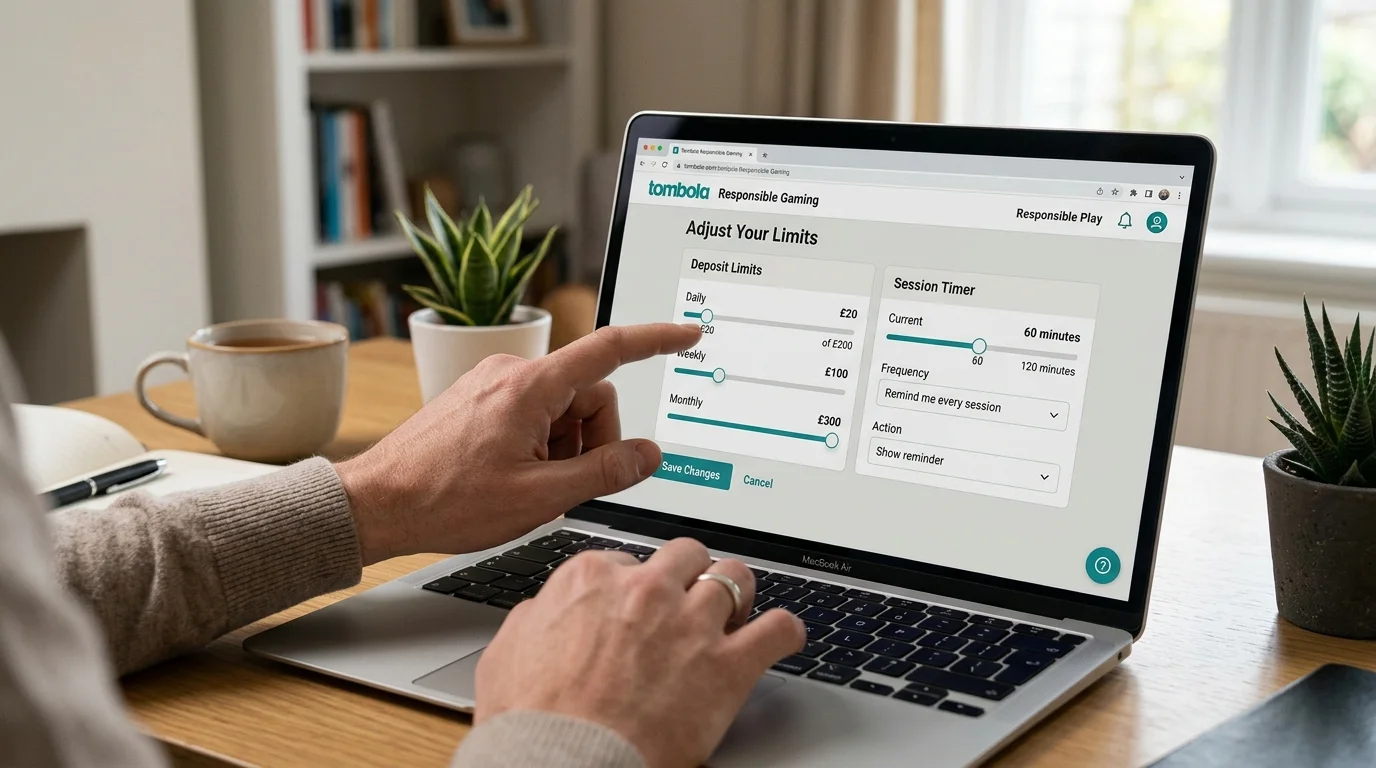
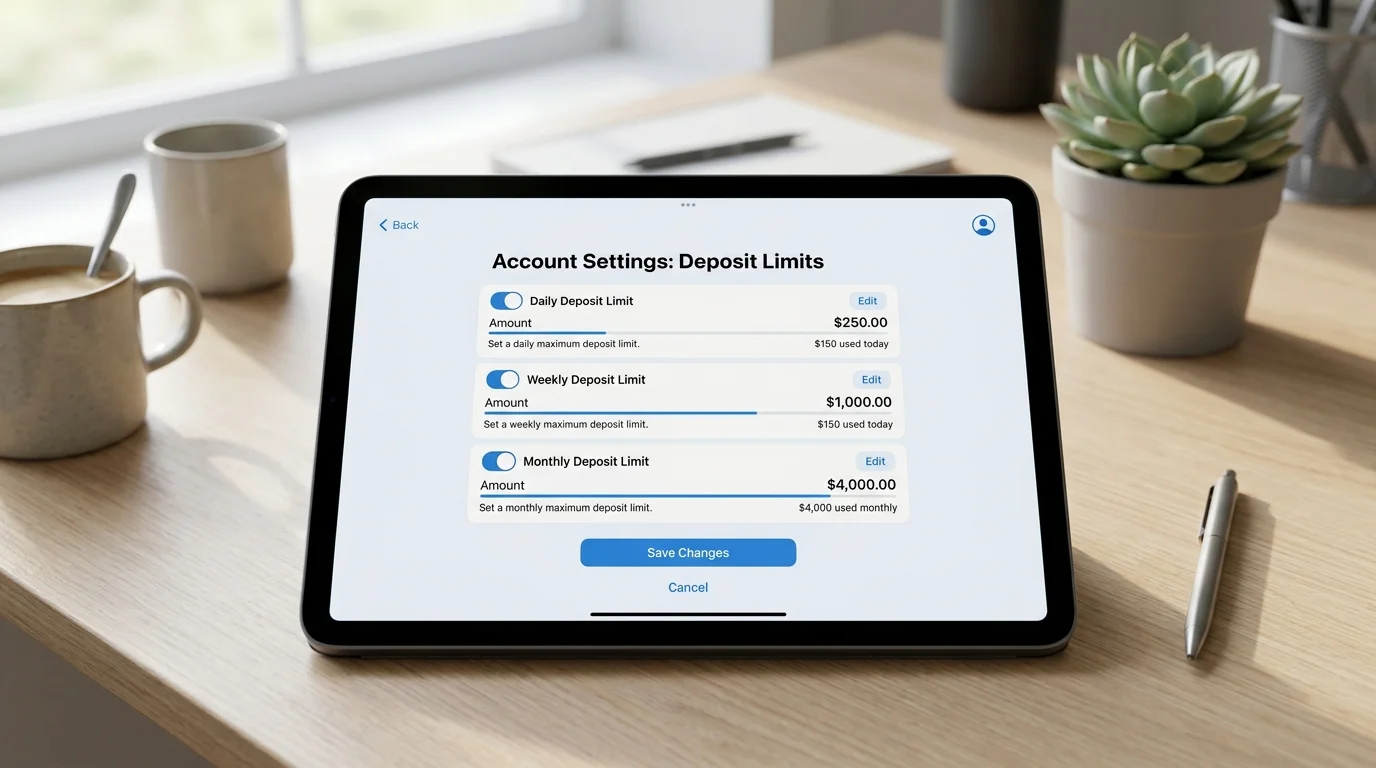
Deposit limits are the first line of defence. Tombola allows players to set daily, weekly and monthly deposit caps. Once a limit is set, it takes effect immediately for reductions — you cannot lower your limit and then immediately deposit beyond it — while increases are subject to a cooling-off period, typically 24 hours. That asymmetry is deliberate and industry-standard: it prevents a player in the grip of a chasing impulse from removing their own safety net in the moment.
Spend caps work alongside deposit limits but operate differently. Where a deposit limit restricts how much money enters your account, a spend cap restricts how much you can wager within a given period. The distinction matters because deposited funds can sit in an account without being spent; a spend cap catches the scenario where a player deposits within their limit but then plays through the entire balance repeatedly. Net spend tracking — which shows the difference between deposits and withdrawals over time — provides an additional layer of visibility into actual expenditure.
Reality checks are timed notifications that interrupt play to show how long you have been in session and how much you have spent. Tombola’s reality check intervals are configurable, though the platform enforces a maximum interval so that players cannot disable the feature entirely. When a reality check fires, it displays session duration, net position and offers the option to continue, take a break or set a new limit. The design of these interruptions is important: if they are too easily dismissed, they become background noise. If they are too intrusive, players disable them. Tombola aims for a middle ground, though whether that balance is optimal depends on the individual player.
Session time limits allow players to set a maximum duration for any single session. When the time expires, the player is logged out. Unlike reality checks, which are advisory, time limits are enforced — you cannot click through a time limit the way you can dismiss a notification. Cooling-off periods offer a temporary suspension of the account, typically ranging from 24 hours to six weeks, during which the account is inaccessible. This is a lighter intervention than full self-exclusion, designed for players who want a break without permanently closing their account.
All of these tools are self-service — players set them up through their account settings without needing to contact customer support. That is an important design principle, because the barrier to using a tool should be as low as possible. A player who recognises they need a deposit limit should be able to set one in thirty seconds, not after a live chat conversation or a support ticket. Tombola meets that threshold.
How Daily, Weekly and Monthly Limits Stack
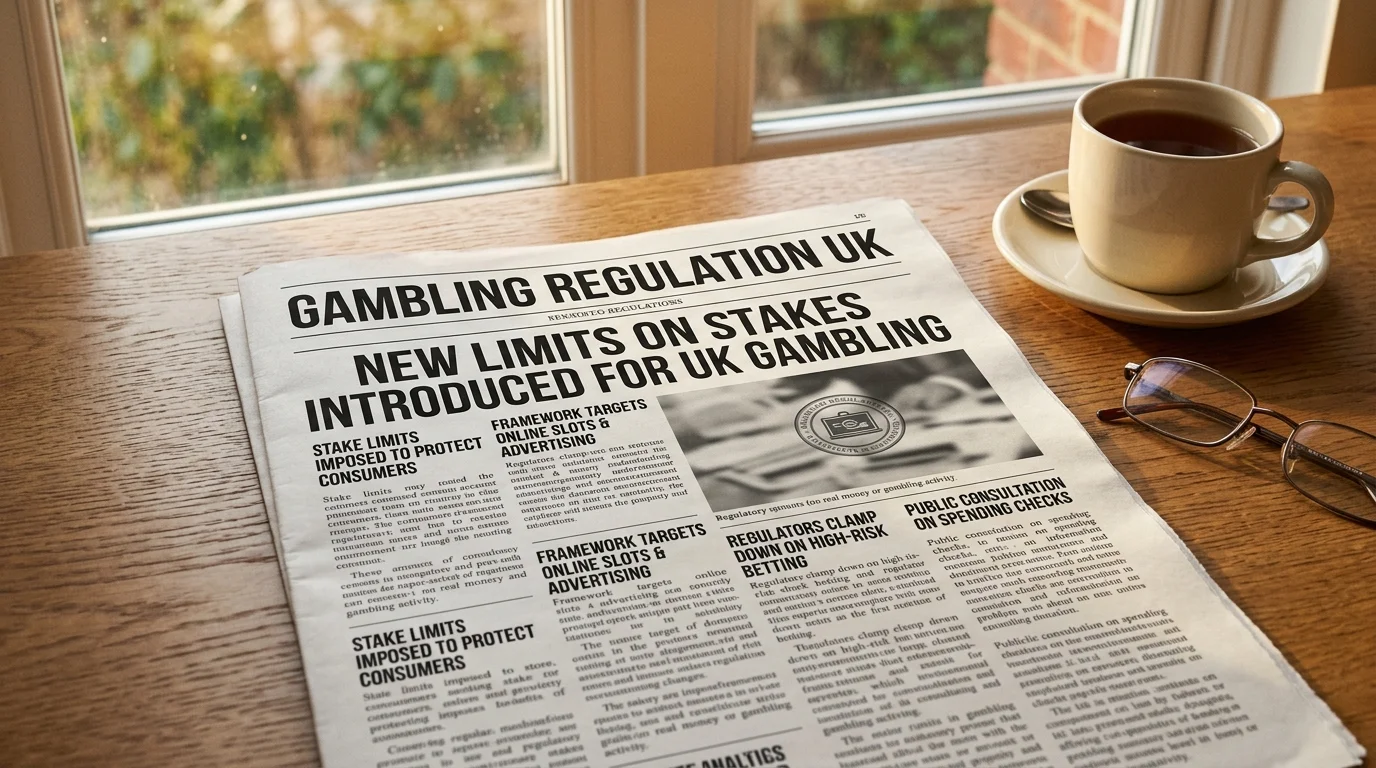
A friend of mine — a casual bingo player, not an industry professional — once told me she had no idea how much she spent per month on her preferred platform. “Maybe £40? Maybe £80? I genuinely do not know.” That uncertainty is exactly what spend limits are designed to eliminate, and what Baroness Twycross, the Gambling Minister, was addressing when she said gambling harm “can ruin people’s finances, relationships and ultimately lives.” The regulatory framework has responded: online slot stakes are now capped at £5 for players aged 25 and over and £2 for those aged 18 to 24, and operators face increasing pressure to implement proactive spend management tools.
Tombola’s spend limit system operates across three timeframes: daily, weekly and monthly. Each limit functions as a hard cap on net deposits within that period. Once you reach your daily limit, no further deposits are accepted until the next day. The weekly limit aggregates daily activity, and the monthly limit aggregates weekly activity. The three tiers stack hierarchically — your daily limit cannot exceed one-seventh of your weekly limit in practical terms, and your weekly limit feeds into the monthly cap.
Setting the limits happens during the account setup process or at any point afterward through the account settings. The interface presents the limit options clearly, with the current setting and the range of available adjustments visible on a single screen. There are no hidden maximums and no minimum floor that forces you to set a limit higher than you want. If you want a daily limit of £5, that is an available option.
Adjusting Limits and the Cool-Off Window
I once reviewed a platform where reducing your deposit limit took effect immediately but increasing it required a 72-hour wait. The asymmetry seemed strange until I understood the logic: reducing a limit is a protective action that should face no barriers, while increasing a limit is a decision that benefits from a cooling-off period to prevent impulsive escalation. Tombola follows the same principle.
Decreasing a spend limit takes effect immediately. If you decide mid-session that your daily limit is too high, you can reduce it and the new, lower limit applies from that moment. There is no waiting period, no confirmation email required, and no support ticket to submit. The reduction is processed in the account settings interface in real time.
Increasing a spend limit triggers a mandatory cooling-off period. The change does not take effect immediately — instead, there is a delay between requesting the increase and the new limit becoming active. This delay varies by timeframe and the magnitude of the increase, but it is always at least 24 hours. The purpose is to introduce a friction point that discourages impulsive limit increases made in the heat of a session. During the cooling-off period, the existing lower limit remains in force.
This asymmetric design — instant decreases, delayed increases — is becoming an industry standard driven by regulatory expectations around responsible gambling. Tombola implemented it earlier than many competitors, which is consistent with its broader approach of treating safer gambling tools as product features rather than compliance obligations. The practical effect is that players who set conservative limits initially can lower them further at any time but must wait before raising them. Planning your limits at the outset, rather than adjusting reactively, avoids the frustration of waiting for an increase during a period when you want to play.
Monitoring Spend: Account History and Alerts
Setting a limit is the first step. Knowing where you stand against that limit during a session is the second, and this is where many platforms fall short. A limit that you can only check by navigating to a buried settings page is functionally invisible during active play.
Tombola provides account history and transaction data through the account section, where deposits, withdrawals, game activity and net spend are visible. The level of detail allows you to track spending patterns over time rather than simply seeing a current balance. This historical view is useful for players who want to understand their habits — whether spending clusters around certain times, whether it increases after wins, whether weekend sessions cost more than weekday ones.
Alerts function as the active component of the monitoring system. When you approach your spend limit, the platform notifies you. The notification serves as a reality check at the point when it matters most — not after the limit is hit and play is blocked, but before, when you still have the option to stop voluntarily. The timing and format of these alerts align with the reality-check interventions that the UKGC has increasingly required operators to implement.
The combination of hard limits, historical tracking and proactive alerts creates a layered system. Any one component alone would be insufficient — a limit without tracking is a blunt instrument, and tracking without alerts relies on the player actively checking. Together, they form a budget management framework that functions throughout the session rather than only at the boundaries. For players who have never used spend limits before, starting with conservative settings and reviewing account history after a few weeks provides the data needed to calibrate the limits to a level that matches actual comfortable spending.
Can I increase my Tombola spend limit instantly?
Decreasing a limit takes effect immediately, but increasing a limit triggers a mandatory cooling-off period of at least 24 hours. The delay is a deliberate safeguard to prevent impulsive increases during active play. During the cooling-off period, the existing lower limit remains in effect.
Does Tombola notify me when I approach my spending cap?
Tombola sends alerts when you approach your set spend limit, giving you advance notice before the cap is reached and deposits are blocked. These notifications function as a reality check during active sessions, allowing you to decide whether to continue or stop before the hard limit is enforced.
UK Regulatory Framework 2026: Stake Limits and the Statutory Levy
The conversation about responsible gambling at any single operator takes place within a regulatory framework that has shifted more dramatically in the past three years than in the preceding two decades. If you are evaluating how Tombola handles player protection, you need to understand the landscape those protections exist within — because the rules governing every UK operator have changed substantially.
The statutory gambling levy, introduced in 2025, requires operators to contribute to a fund projected to generate £100 million annually for research, prevention and treatment of gambling harm. That money is allocated across three channels: 50% to the NHS for treatment services, 30% to prevention programmes, and 20% to the UK Research and Innovation council for academic research into gambling behaviour and harm. This replaces the previous voluntary contribution system, which was widely criticised for inconsistent funding and potential conflicts of interest. The mandatory nature of the levy means every licensed operator, including Tombola, contributes regardless of their individual responsible gambling performance.
Online stake limits are the other major regulatory shift. The £5 cap for adults aged 25 and over took effect on 9 April 2025 (and applied to all adults during a six-week transition), with the stricter £2 cap for 18-to-24-year-olds following on 21 May 2025. These limits apply specifically to slots rather than bingo, so the direct impact on Tombola’s core product is minimal — bingo ticket prices were already well below these thresholds. The indirect impact, however, is significant: stake limits on slots have reshaped the competitive dynamics of the UK market, and some players displaced from high-stake slot play have moved towards lower-risk products including bingo.
Baroness Twycross, the Gambling Minister, framed the regulatory agenda in stark terms when announcing the stake limits and statutory levy, stating that gambling harm affects finances, relationships and lives. That language reflects a political environment where the gambling industry faces sustained scrutiny and where operators are expected to demonstrate measurable outcomes, not just policy compliance. The treatment completion rate for gambling addiction — only 61% of individuals completed their designated course of treatment over the 2021-2025 period, down from 68% in the previous five years — underscores the scale of the challenge and the limits of what operator-level tools alone can achieve.
For Tombola specifically, the 2026 regulatory landscape is a mixed picture. The abolition of Bingo Duty removes a 10% tax that had been applied to bingo operators’ profits, which improves the economics of running bingo-focused games. Simultaneously, the increase in Remote Gaming Duty from 21% to 40% raises the tax burden on all online gambling revenue, including Tombola’s. The net effect depends on the proportion of revenue derived from bingo versus other game types, and Tombola’s bingo-heavy product mix means it benefits more from the Bingo Duty abolition than operators with primarily slot-driven revenue.
The regulatory direction is unambiguous: operators are expected to do more, spend more on compliance, and demonstrate measurable improvements in player protection. The era of voluntary commitments and self-regulation has been replaced by statutory obligations with financial teeth. For players, this translates into a safer environment overall — but it also means the quality of implementation at the operator level matters more than ever, because the gap between minimum compliance and genuine best practice is where real protection lives.
How Tombola’s Safer Gambling Standards Compare to Other UK Operators
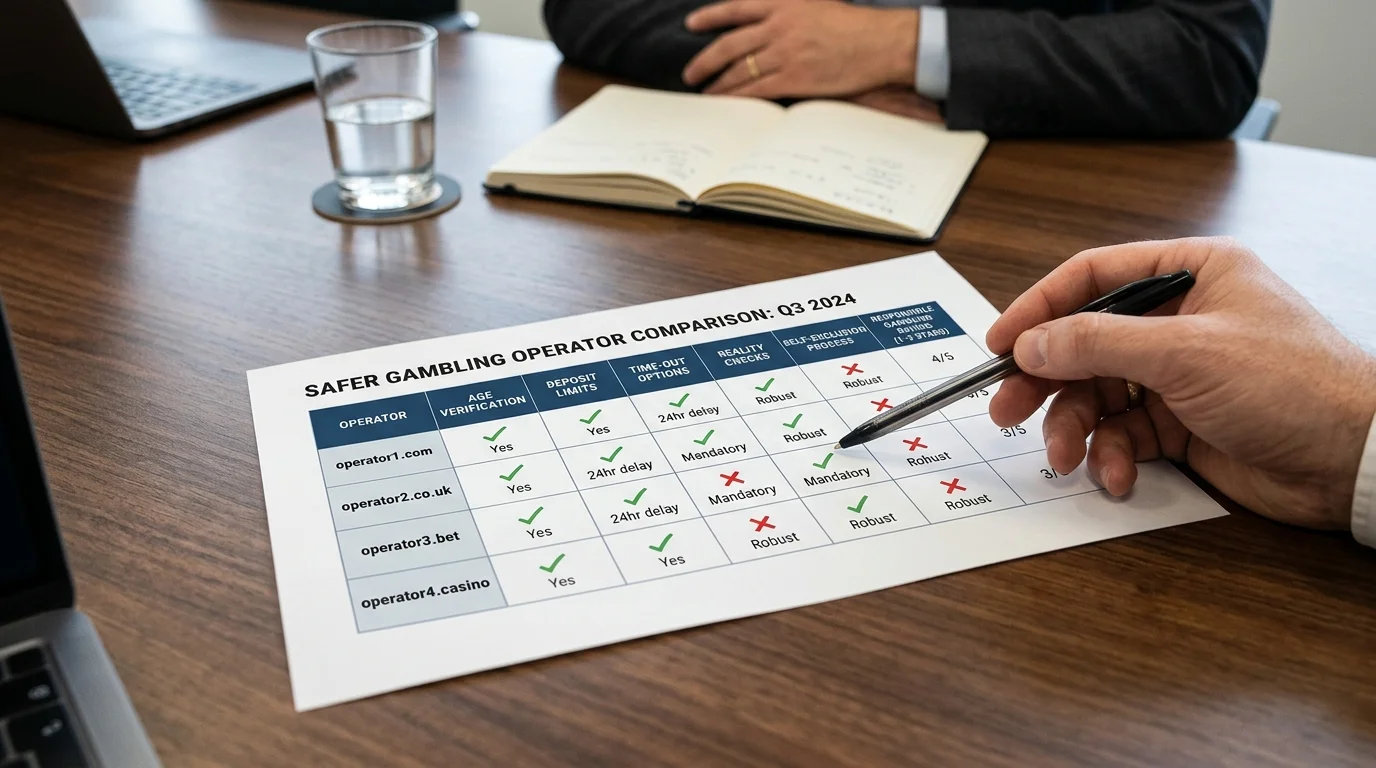
Comparisons in responsible gambling are inherently tricky because the most important outcomes — how effectively an operator prevents harm — are not publicly measurable in the way that game selection or bonus terms are. What we can compare are the structural indicators: accreditation level, tool availability, policy transparency, regulatory history and the design decisions that shape player experience.
On accreditation, Tombola’s GamCare Level 3 places it in the top tier. Not every UK-licensed operator holds any level of GamCare accreditation, and among those that do, Level 3 is the minority. The major operators — those with significant UK market share — tend to hold Level 2 or Level 3, but many smaller or mid-tier operators operate with Level 1 or without GamCare accreditation altogether, relying solely on UKGC licence conditions to define their responsible gambling obligations.
On tool availability, Tombola’s suite — deposit limits, spend caps, reality checks, session time limits, cooling-off periods, self-exclusion — matches the feature set of the largest operators. The differentiator is not the tools themselves but the design context. Tombola’s low-stakes, bingo-focused model means the tools operate in an environment where the average session spend is substantially lower than at slot-heavy casinos. A deposit limit of £50 per week at Tombola means something different than the same limit at an operator where individual slot spins cost £5. The tool is the same; the risk profile of the underlying product is not.
The wager-free bonus model, discussed in detail in the bonus analysis, also has responsible gambling implications. Wagering requirements create an incentive to play beyond what a player would otherwise choose — the bonus cannot be realised without completing the playthrough, which means the operator is structurally encouraging extended play. By removing wagering requirements, Tombola eliminates that incentive loop. Whether this constitutes a “safer” bonus model is a judgement call, but the removal of a mechanic that pressures continued play is consistent with harm-reduction principles.
Where Tombola’s approach has limitations is in external verification layering. The in-house development model means all fairness testing flows through the UKGC’s own framework rather than adding an independent testing laboratory on top. This is not a regulatory gap — the UKGC’s technical standards are robust and legally binding — but operators who use third-party suppliers gain an additional layer of certification from bodies like eCOGRA or iTech Labs as a byproduct of the supplier relationship. Tombola forgoes that byproduct. For most players, the difference is invisible; for those who value maximum transparency, it is a structural distinction worth understanding.
Ultimately, the most meaningful comparison is not between Tombola and any single competitor but between Tombola and the regulatory minimum. The UKGC sets the floor; operators decide how far above it to build. Tombola’s GamCare Level 3 accreditation, its wager-free bonus model, its low-stakes product design and its configurable tool suite represent choices that go beyond the baseline. Whether those choices are sufficient depends on the individual player’s risk profile and expectations — but the framework itself is substantively stronger than what the licence alone requires.
Where to Get Help: GamCare, GamStop and NHS Resources
No operator-level tool replaces professional support when gambling stops being recreational. The UK has a structured network of services designed to help individuals experiencing gambling harm, and knowing what those services are — before you need them — is as important as understanding the platform you are playing on.
GamCare operates the National Gambling Helpline, providing free, confidential advice and support to anyone affected by gambling. The helpline offers counselling, referrals to treatment services and practical guidance on managing gambling-related financial difficulties. Tombola displays GamCare contact information within its responsible gambling section, which is standard practice for UKGC-licensed operators.
GamStop is the national self-exclusion scheme for online gambling. Registering with GamStop excludes you from all UKGC-licensed online gambling sites — not just Tombola — for a period of six months, one year or five years. It is a cross-operator system, meaning a single registration covers every licensed platform simultaneously. This is a stronger intervention than self-exclusion at a single operator, because it removes the ability to simply move to a different site after closing one account.
The NHS Northern Gambling Service and the National Gambling Support Network provide clinical treatment for gambling disorder, including cognitive behavioural therapy and structured treatment programmes. These services are funded in part by the statutory gambling levy and are available at no cost to patients. Referrals can come through a GP, through GamCare, or through self-referral depending on the service and region.
For anyone experiencing financial difficulties related to gambling, organisations like StepChange and the Citizens Advice Bureau provide debt counselling and financial planning support. Gambling-related debt is treated as a specific category with tailored advice pathways, recognising that the underlying dynamics differ from other forms of consumer debt.
Tombola’s responsible gambling page provides links to all of these services. The presence of those links is a licence requirement, not a voluntary gesture, but the accessibility and prominence of the information — how many clicks it takes to reach, where it sits in the account interface — varies between operators. The important thing from a player perspective is to be aware these services exist independently of any operator, and that accessing them does not require the operator’s involvement or knowledge. If you or someone you know is affected by gambling, these services are free, confidential and available regardless of which platform is involved.
Responsible Gambling Questions
How do I set a deposit limit on my Tombola account?
Deposit limits are configured through the account settings section of the Tombola website or app. Navigate to the responsible gambling or account limits area, select the type of limit you want to set — daily, weekly or monthly — and enter the maximum amount. Reductions take effect immediately. Increases are subject to a cooling-off period before they become active.
What is the difference between GamCare Level 1, Level 2 and Level 3?
Level 1 confirms an operator has baseline responsible gambling policies and tools in place. Level 2 requires evidence that these policies are actively implemented and that staff receive appropriate training. Level 3 — the highest tier — requires demonstration that responsible gambling is embedded into organisational culture, strategic decision-making and operational practice at every level, verified through comprehensive independent audit.
Can I temporarily suspend my Tombola account without full self-exclusion?
Tombola offers cooling-off periods that temporarily suspend your account for a defined duration, typically ranging from 24 hours to six weeks. During a cooling-off period, you cannot log in, deposit or play. This is a lighter intervention than self-exclusion, which closes the account for a minimum of six months. Cooling-off periods are self-service and can be activated through your account settings.
Does Tombola share my responsible gambling data with other operators?
Tombola does not share individual player data directly with other operators. However, if you register with GamStop — the national self-exclusion scheme — your self-exclusion status is shared across all UKGC-licensed online operators to enforce the exclusion. The statutory levy and regulatory reporting obligations also involve aggregated, anonymised data submissions to the UKGC, but these do not include personally identifiable player information shared between operators.