
 Available in US
Content

Tombola had approximately 400,000 average monthly players at the time of its acquisition by Flutter Entertainment in January 2022, the majority of them low-stakes recreational bingo players (Flutter Entertainment press release, November 2021). That demographic shapes how the platform sets its minimum deposit: low enough to onboard a casual player who wants to try a few £1 bingo tickets, high enough to keep payment processing economical. The figure that ends up on the deposit screen is the result of those two pressures meeting, and it sits within the same band as the rest of the UK bingo field.
What Sets a Minimum Deposit at a Bingo-Led Operator
The minimum deposit at any UKGC-licensed operator is not a regulatory figure — the regulator does not set a floor — but a commercial one. Three forces pull on it. Payment processing costs make very small deposits uneconomic if every transaction carries a flat fee. Player-protection thinking pulls in the opposite direction: a higher minimum forces a casual player to commit a larger initial sum than they may have intended to spend. And the platform’s own positioning matters: a bingo-led operator catering to recreational players will tend to set a lower floor than a high-stakes slots operator courting deposit-bonus hunters.
Tombola sits firmly in the recreational-bingo camp. Its in-house, low-stakes game design (every game built by Tombola’s own team, no third-party slot providers) is consistent with a deposit threshold aimed at players who buy £1 bingo tickets, not £5 slot spins.
How Tombola’s Threshold Compares to the UK Bingo Field
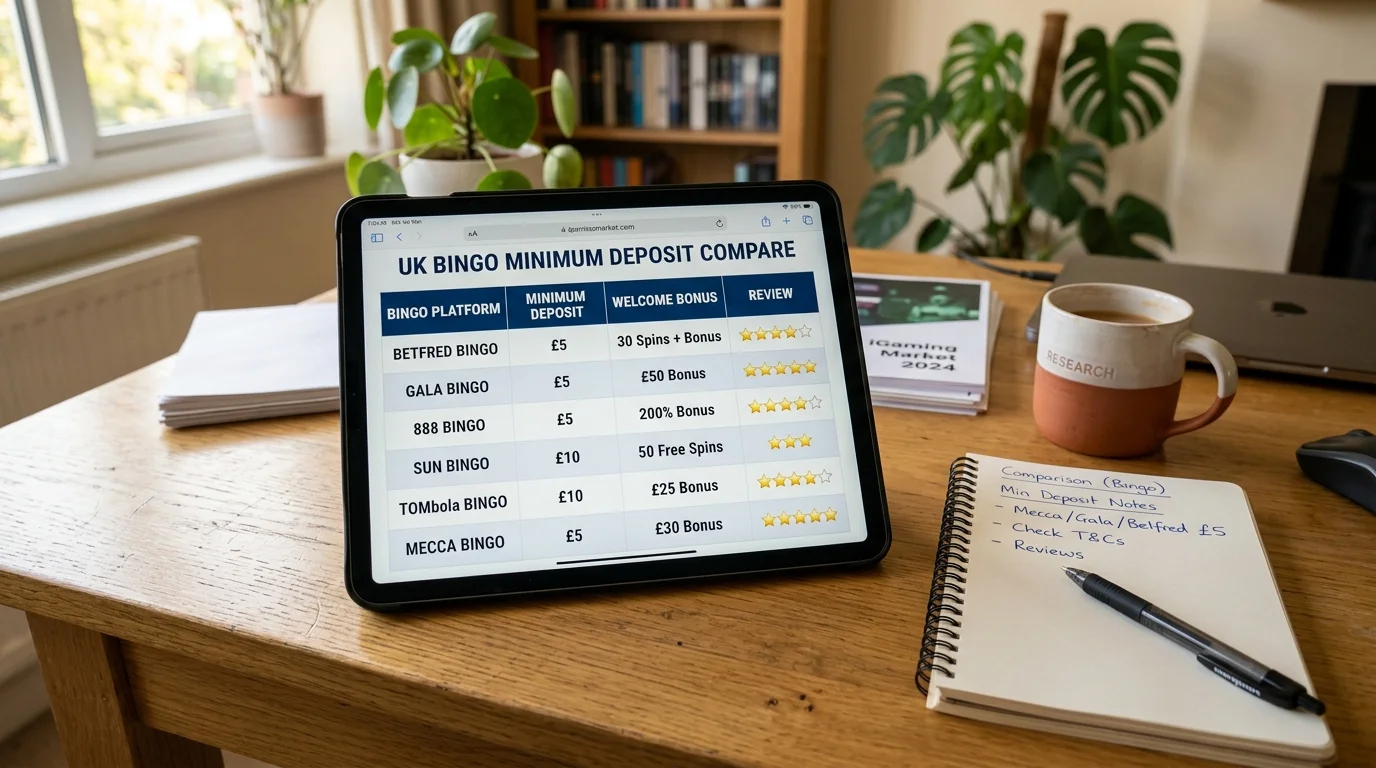
The UK bingo segment as a whole clusters in a low-deposit band. Direct competitors include Mecca Bingo (owned by Rank Group), Buzz Bingo, and 888ladies (part of Evoke) — all UKGC-licensed and all targeting the recreational end of the market. The differences between them at the minimum-deposit level are small in absolute terms and matter less than the differences in bonus structures, withdrawal speeds, and game libraries.
The genuinely useful framing is positional rather than numerical: Tombola sits at the lower end of the bingo-operator range, consistent with the platform’s bingo-first, low-stake recreational model. Players hunting headline slot bonuses will find higher minimum-deposit qualifiers at slot-led operators because those operators’ welcome structures are designed around larger first deposits.
The Payment-Method Variable
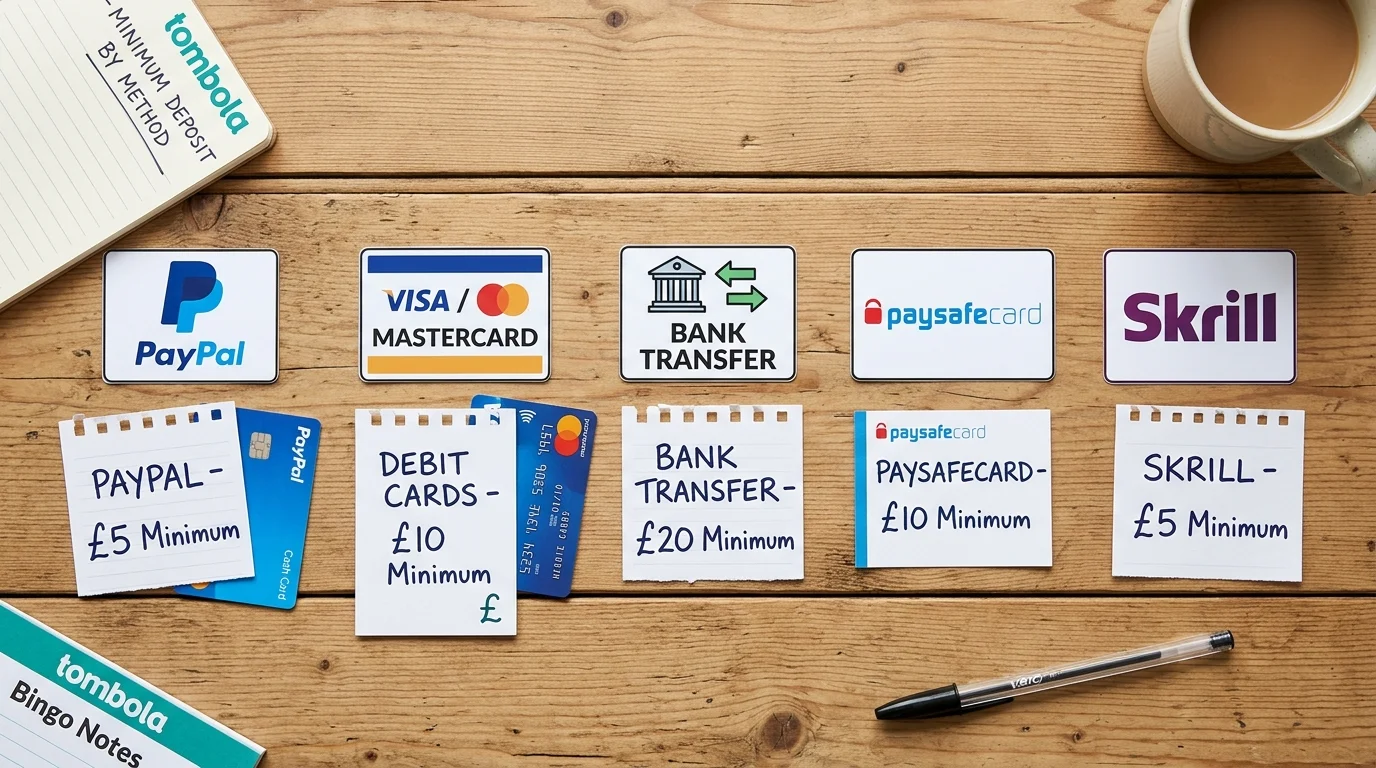
The platform minimum is one number. The practical minimum for any given player is the higher of (a) the platform minimum and (b) the lowest amount the chosen payment method will process. Debit cards (Visa, Mastercard) generally support very small minimums and are the most common Tombola deposit route. E-wallets such as PayPal sometimes impose their own provider floor. Pay-by-mobile options are typically capped at higher per-transaction limits but with their own provider rules on the lower end.
For first-time players who want the smallest possible deposit, debit card is usually the lowest-friction option. The full method list and processing-time comparison sits on the parent payment methods page; first-deposit identity verification (KYC) is described under how withdrawals work, since the KYC paperwork done at first deposit is what enables the first withdrawal later.
Practical Budgeting at a Low Minimum
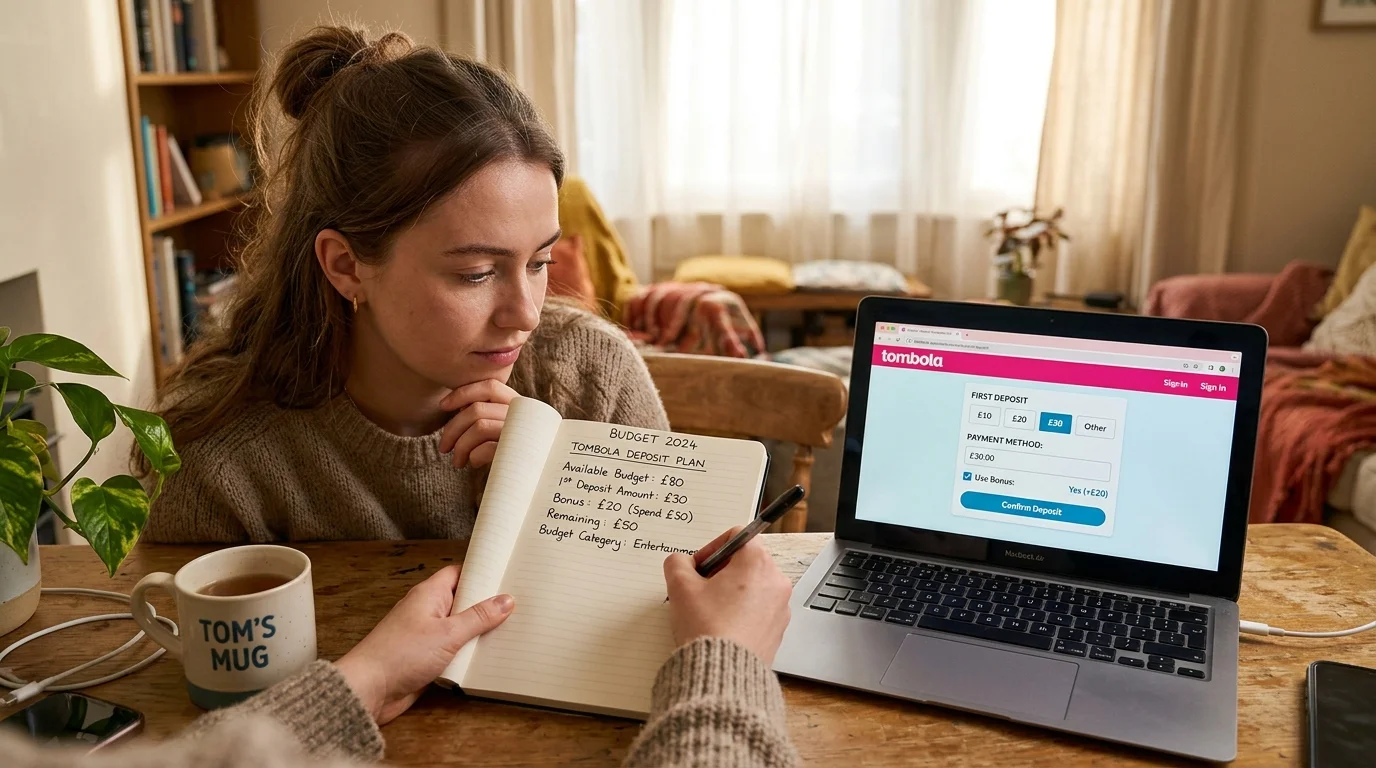
A low minimum deposit makes single-session budgeting simpler, not harder. The strongest discipline is to treat each deposit as a fixed entertainment budget rather than a top-up tier. If the intention is one hour of play with a £10 ceiling, deposit £10 and stop. Tombola’s deposit-limit tools, mandated as part of UKGC licence conditions, let any player cap weekly or monthly spend at a chosen figure regardless of the platform minimum. A deposit limit of £50 per week at a bingo operator means something different from the same limit at a slot-led operator where individual stakes can hit the £5 cap per spin — the bingo product naturally produces longer sessions per pound deposited.
The new statutory levy framework — 50% to NHS-led treatment, 30% to prevention via OHID, 20% to research via UKRI, raising approximately £100 million per year — sits behind the deposit-limit infrastructure and is funded partly by the same operators who set the deposit minimums. The system is designed so that the choice to deposit £10 and stop is supported by genuine tooling, not left to willpower alone.
Frequently Asked Questions
Does Tombola’s minimum deposit change depending on payment method?
The platform-level minimum is the same regardless of method, but each method’s own provider may impose its own minimum. Debit cards typically support very small first deposits; e-wallets and prepaid options sometimes have a slightly higher floor. The practical minimum is the higher of the two.
Why is the minimum deposit relevant to responsible play?
A low minimum lets players treat a deposit as a fixed entertainment budget rather than topping up repeatedly. The UKGC-mandated deposit-limit tools work alongside the minimum and let any player cap weekly or monthly spend independently of how much they choose to deposit.
Is there a minimum first deposit to qualify for Tombola’s welcome offer?
Yes — the welcome offer has a qualifying minimum that is generally higher than the platform’s absolute deposit minimum. The exact qualifying figure should be confirmed in the offer’s terms before depositing, since promotional minimums change more often than the platform minimum.
How does Tombola’s minimum compare to other UK bingo operators?
UK bingo operators generally cluster in a similar low-threshold band, with debit-card minimums typically in single-digit pounds. Tombola’s positioning aligns with that of mid-market recreational bingo, consistent with its bingo-led customer base of around 400,000 average monthly players at acquisition.
See also: the payment methods overview, how to withdraw from Tombola, and the welcome-offer breakdown.